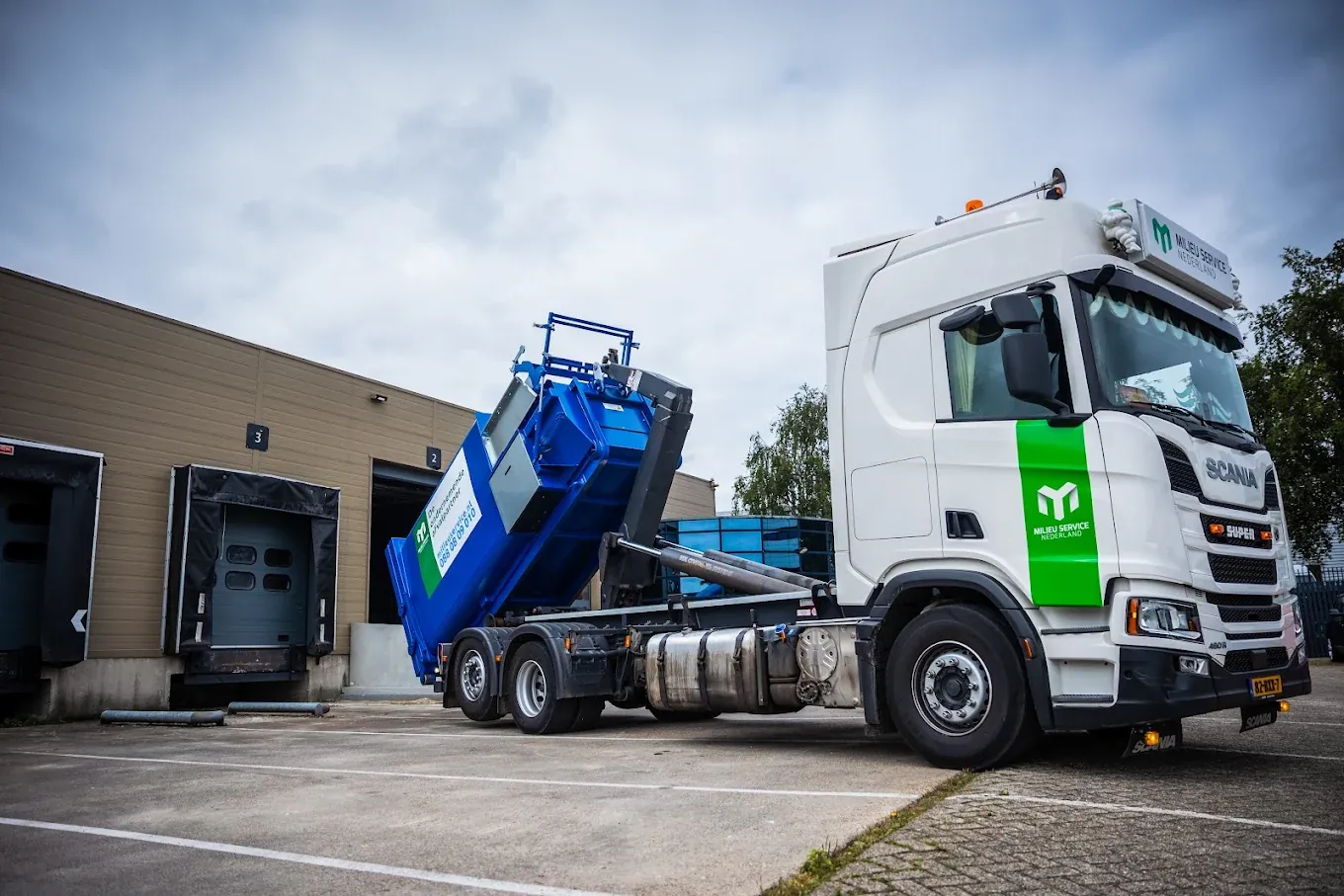
Meer dan 70 voertuigen rijden elke dag rond met onze D4T (Daisy4Trucks). Samen zijn ze goed voor ongeveer 1,75 miljoen ledigingen per jaar en houden ze zo’n 157.500 ton afval continu onder observatie. In commercieel restafval meten we gemiddeld 40 tot 50% recyclebaar materiaal. Als we conservatief rekenen met de ondergrens, betekent dat dat jaarlijks ongeveer 63.000 ton recyclebaar materiaal in de verbrandingsoven belandt. Geen gemiddelde uit een steekproef, maar gegevens die we kunnen herleiden naar een specifieke klant, een specifieke container en een specifieke lediging.
(Laatste update cijfers 19/10/2026)
Van meting naar vermeden emissies
Iets zichtbaar maken is één ding. Er daadwerkelijk iets mee doen is een ander. En precies daar ligt de rol van onze klanten. Een afvalinzamelaar die weet welke klant week na week folie bij het papier doet, heeft een ander gesprek dan een afvalinzamelaar die iedereen vraagt beter te sorteren.
Zo'n gesprek draait de zaken niet in één keer om. Toch zien we dat gerichte klantbewustwordingswerk snel ongeveer 3% minder vervuiling per klant per jaar oplevert.
Voor de volledige vloot uitgerust met D4T betekent dat vandaag ongeveer 4.725 ton afval per jaar die niet langer naar de verbrandingsoven gaat, maar naar recycling. Wat dat bespaart aan emissies is niet iets dat we zelf bepalen. We volgen de officiële Nederlandse emissiefactoren, waarbij voor elke afvalfractie de verbrandingsroute wordt afgezet tegen de recyclingroute. Gemiddeld levert elke omgeleide ton zo’n 1,3 ton CO₂-besparing op. In totaal komt dat neer op ongeveer 5.670 ton CO₂ per jaar.
De rit die nooit gemaakt wordt
De tweede manier waarop D4T een aanzienlijke hoeveelheid CO₂ bespaart, is door zinloze ritten te vermijden. Dan hoeft die lading niet eerst naar de verwerker om daar te worden afgewezen. De rit wordt simpelweg niet gemaakt. Dat gebeurt gemiddeld twee tot vijf keer per maand per voertuig, over een afstand van ongeveer 30 kilometer. Opgeteld vermijden we daarmee jaarlijks zo’n 176.400 kilometer aan zwaar transport, meer dan 4x rond de evenaar. Dat is goed voor nog eens ongeveer 176 ton CO₂-besparing per jaar.
Een groenere toekomst
De verschuiving van verbranding naar recycling en de vermeden transportkilometers samen leveren over de actieve vloot een besparing op van ongeveer 5.900 ton CO₂ per jaar. Dat komt neer op zo’n 90 ton CO₂ per uitgerust voertuig. Dat laatste cijfer is belangrijk. Want de komende jaren willen we steeds meer voertuigen met D4T uitrusten. Hoe meer voertuigen meten, hoe groter de impact die we samen kunnen realiseren.
Onze ambitie voor de komende vijf jaar is duidelijk: de vervuiling in commercieel restafval halveren, van 40 à 50% naar ongeveer 20%.
Wat betekent dat voor jouw vloot? We meten het graag.