Since 1 January 2026, waste collectors in Flanders are required to invoice commercial residual waste based on the actual weight presented. At the same time, the environmental charges for the incineration of household and commercial residual waste have been aligned, and the charge itself has significantly increased: from €16.26 to approximately €32 per ton. The direction is clear. Residual waste is becoming more expensive, and the difference between good and poor sorting will be visible on the invoice.
The bill consists of five layers
Anyone wanting to understand the cost of contamination must look beyond the gate fee. In practice, costs accumulate in five layers.
1. Processing cost: a contaminated fraction is rejected or downgraded and goes to incineration, at a rate that has just increased.
2. Material value: a pure stream has market value. The same stream above the contamination standard does not have that, or much less.
3. Operational cost: extra handling, sometimes an extra trip, and time of people who are needed elsewhere. Often the most expensive item, and immediately the least visible.
4. Administration: establishing, documenting, contacting the customer, conducting the discussion. Without evidence, this takes a long time and rarely ends well.
5. Customer relationship. A surcharge without evidence feels unjust. Visual material of one's own container feels different.
Why the discussion is stalled
Collectors know that contamination costs money. They can only find it difficult to demonstrate at the customer level. Findings are based on a sample, a report from a driver, or a check at the gate. At that last point, loads have already been combined. You know that there is contamination, but not where it comes from. Thus, the cost remains with those who can influence it the least.
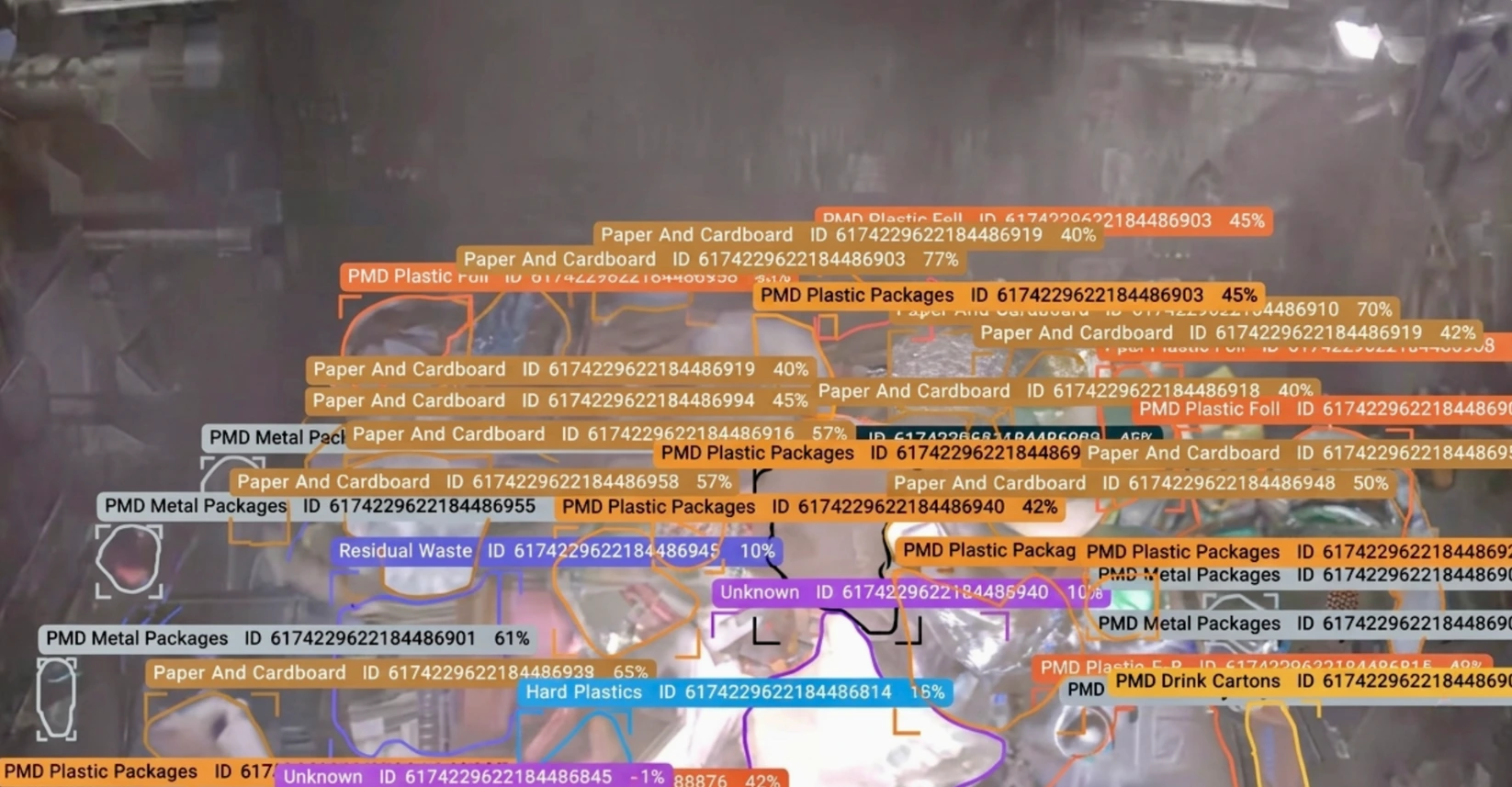
D4T moves the measurement point to the beginning of the chain. Cameras on the vehicle register every emptying and computer vision analyses the content on-site, in real time. Each detection receives a timestamp, a location, and footage.
As a result, the conversation changes. Not: we suspect that something is going wrong. Rather: this came out of your container on Tuesday morning, this is the pattern of the past months, and here is the gain. Milieu Service Nederland is already using those insights today for advisory discussions about source separation and collection frequency.
"Contamination costs money in places where no one finds it in the accounts. Once you can demonstrate it at the customer level, it becomes open for discussion. The goal is not to punish, but to tackle the problem together better," clarifies Bram Peetermans, CEO of Rematics.
From cost item to argument
Companies in Flanders must have 29 waste streams collected selectively and face stricter reporting obligations. Those who can show them what is really in their container and which adjustment lowers their invoice offer more than just a collection. The collector becomes an advisor, and that is a stronger position than competing on price per trip.
Flanders aims for 30 percent less business residual waste by 2030. You won't achieve that with surcharges alone, but with customers who understand where things are going wrong and what they can do about it.
Curious about what contamination costs your organisation? Request a demo.