Are we sorting the way we should? Super-smart refuse trucks will soon have the answer
HASSELT A refuse truck that knows exactly which waste bags it is collecting and can even see whether people in Limburg are sorting properly: it is no longer a thing of the future. Hasselt-based company Rematics has signed an agreement with Limburg.net to equip the entire fleet with a smart camera system by the end of the year. The technology could even report litter or a fallen tree.
A conveyor belt leading to a container, next to it a large, full wheelie bin, and above it cameras keeping an eye on the whole set-up. The Rematics office in Hasselt looks a little unusual. It is in fact a lab where the technology the start-up develops is tested continuously.
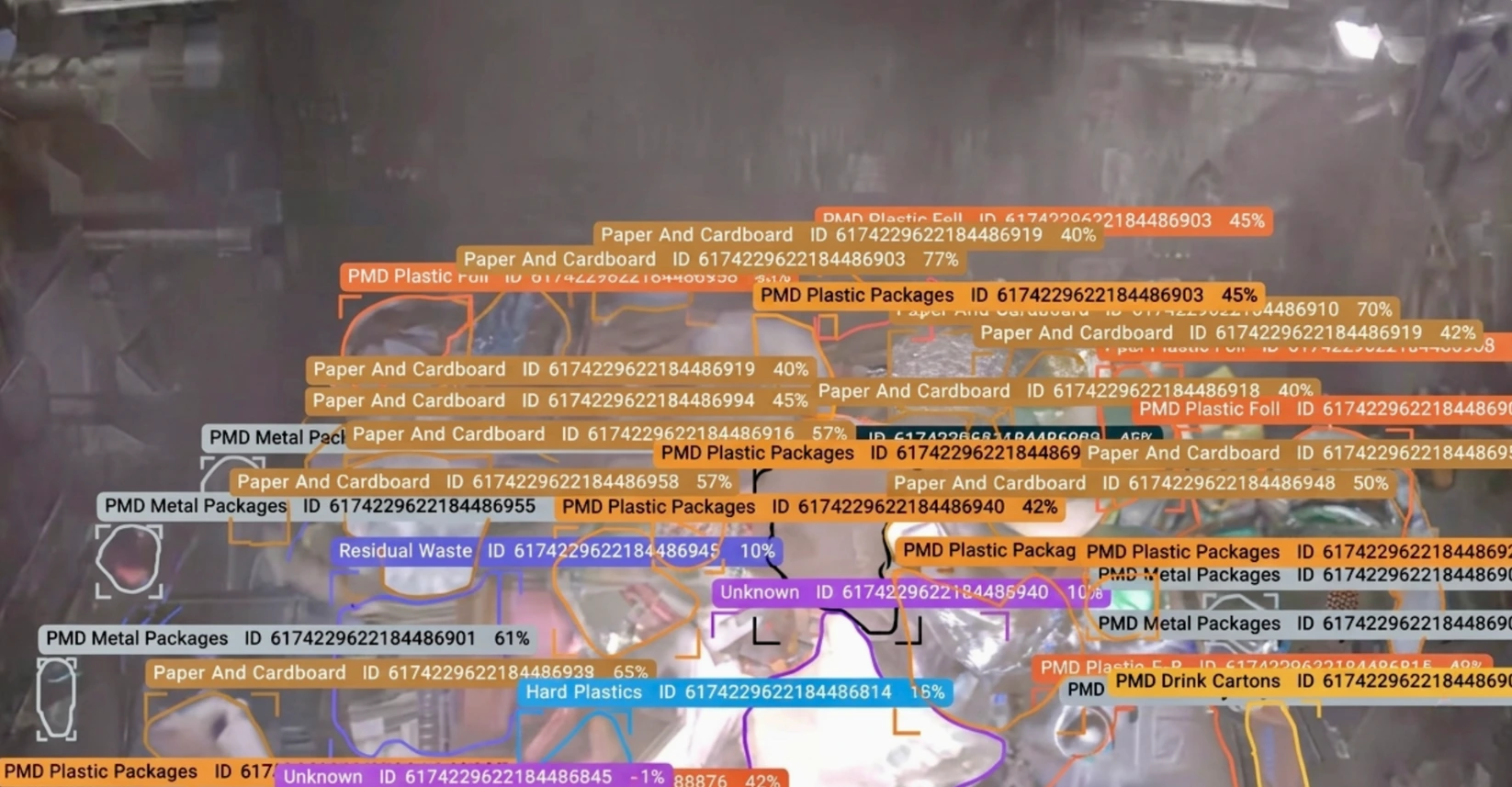
At the push of a button, CEO Bram Peetermans starts the installation. The full bin is lifted and, thanks to the cameras, we can follow on a screen how the waste falls into a container. It happens lightning fast, but with the help of artificial intelligence the system immediately shows whether it is, for example, plastic, cardboard or cans, and how much waste of each category there is.

Suddenly a beeping alarm sounds. The AI model also recognises potential danger. Among the falling waste, the cameras have spotted a nitrous oxide canister. A question from Sanne Van Looy (N-VA) in the environment committee of the Flemish Parliament revealed that nitrous oxide caused 3,614 explosions in incinerators last year. In fifty cases, the furnaces had to be shut down as a result. “By equipping our refuse trucks with cameras and our AI model, we can avoid such problems. The same goes for risks posed by large e-bike batteries or fire extinguishers in the waste,” says Peetermans.

It is just one example of how the company wants to make refuse trucks smarter by equipping them with cameras and sensors. Rematics is a start-up and the technology is still in full development. Software company ACA Group is one of the investors, together with Nuhma, the climate company of the Limburg municipalities, which participates through data technology company MyCSN. Rematics does have its roots at Valipac, which is responsible for the selective collection of commercial waste in Belgium.
Commercial waste
“Valipac wanted to know whether technology could help them reduce the amount of recyclable material in companies’ residual waste. A number of tests showed there was enough potential, but Valipac could not commercialise the application itself. That is how Rematics was born,” Peetermans explains. “Our first focus was the mandatory visual check when commercial waste is collected. That is an administrative task for the truck driver, but thanks to our technology we can automate that check. With the data we provide on the collected waste, collection companies can in turn help their customers sort better and improve their operations.”
With this technology, we can count how many bags, and of which colours, are in the truck during a round
Bram Peetermans
CEO Rematics
The algorithm can recognise dozens of different waste streams. “In Flanders, 28 different waste fractions have to be screened for commercial waste, but we have split them up further. For PMD waste, for example, we also want to know whether it is plastic, metal, a drinks carton or a can. That gives us just over fifty different sub-fractions the algorithm can recognise. A refuse truck like that vibrates, is dirty and dust is constantly swirling around. It already works in the most difficult conditions, so we can apply this elsewhere too.”

According to Peetermans, the cameras on the refuse trucks can recognise litter or the coloured bags of Limburg.net. After a pilot project, Rematics signed an agreement with the waste intermunicipal company to equip the entire fleet with the camera system by the end of the year.
“With this technology, we can count how many bags, and of which colours, are in the truck during a round. And from that we can deduce in which streets there are more of certain fractions. That way we learn more about sorting behaviour, and Limburg.net can better align its collection rounds, as well as its policy and awareness campaigns.” The technology would mainly add value in municipalities using the Optimo system, where one truck collects several types of waste at home in a single day, in bags with their own colour.

Rematics counts several private waste collectors among its customers and is in talks with other companies in the waste sector. The company also sees many other applications. According to Peetermans, a refuse truck can become a technology platform on wheels, full of sensors.
Lasers
LIDAR is one such technology that would fit on a refuse truck. LIDAR uses laser beams to create accurate 3D maps of the surroundings. Such maps are already used for public tenders or tree maintenance. “The images are currently made with a scanning vehicle or from an aircraft,” Peetermans explains. “That costs a fortune, but the refuse truck drives out every day anyway. After a storm, for example, the data from the whole fleet can quickly show where urgent interventions are needed, such as a loose cable, a fallen tree or an overhanging branch. All without the services having to send out extra crews.”
The refuse truck can scan not only the surrounding neighbourhood but also the road surface beneath it. A newly laid street could get a quality score, or the system could detect where urgent repairs are needed. The lasers could even spot litter on the verge.
Privacy
So the smart refuse truck knows a great deal, for example about our sorting behaviour and perhaps even about the state of our front garden. Does that not create a privacy problem? “LIDAR cannot recognise people,” Peetermans responds. “Only objects. LIDAR detects, for example, objects that do not belong in a certain environment. Only anonymous data is sent from the trucks to the data platforms. That way we can train the technology to recognise litter. Combined with detailed maps, we can offer local authorities a wealth of data on urban cleanliness.”
Sensors
Rematics has other applications in mind as well. A refuse truck still has plenty of room for extra sensors, for example to measure noise levels or air quality. “With those measurements, we analyse the nuisance caused by ambient noise, for example from motorways or railways. Because the refuse truck drives through a given neighbourhood very often, you create a very objective picture.”

How long will it take before the refuse truck is smart enough to detect litter, for example? “That is only a small step,” says Peetermans. “Because it is based on the systems we already have. We are already in talks with Limburg.net about installing extra cameras. Everything depends on market demand. Having a scanning car map the road surface or the surroundings costs between 40 and 100 euros per kilometre. We can do this considerably cheaper and leave the sensitive data in the hands of governments instead of private parties. That is where we can take a big step forward.”